
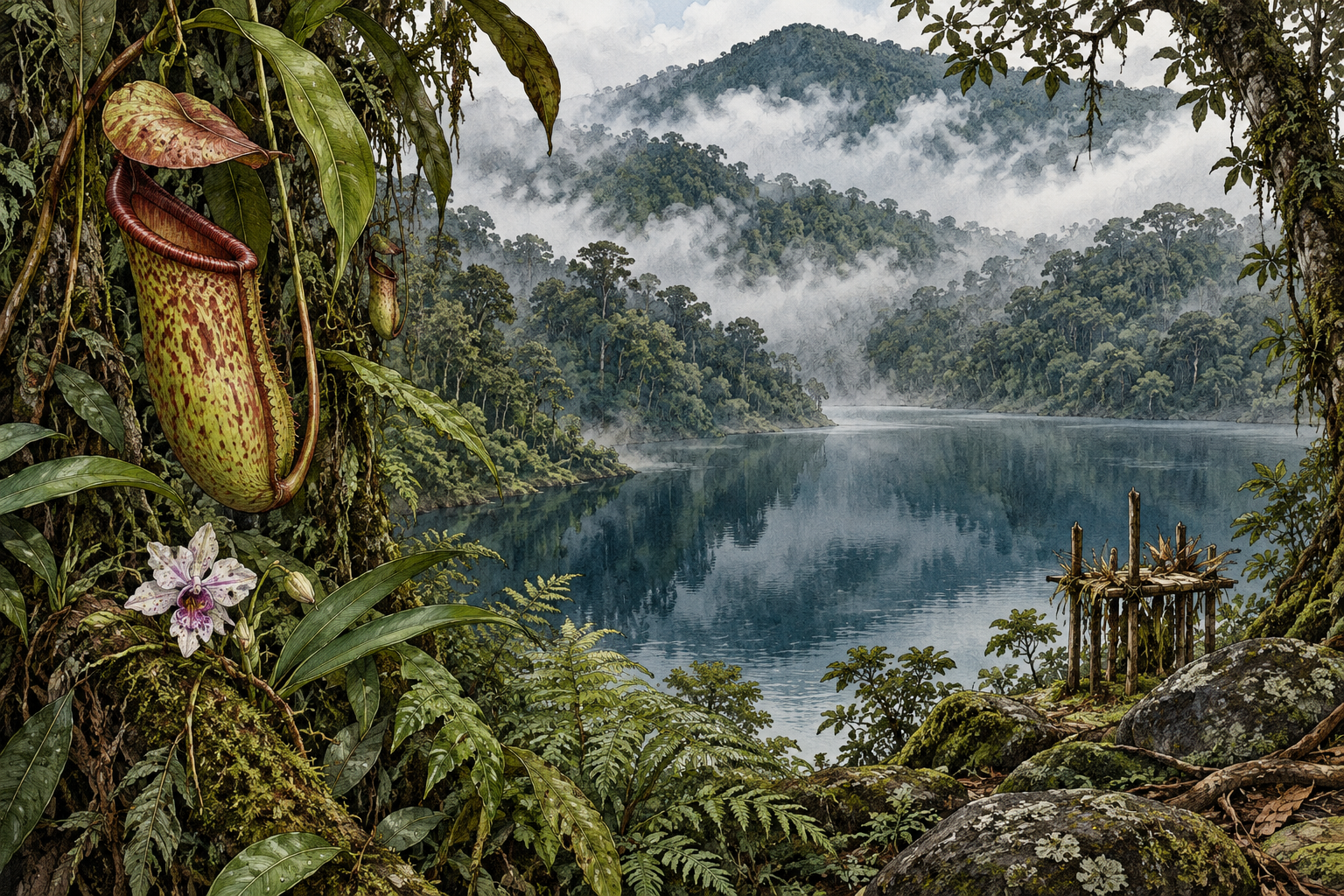
Sicike-cike: A Forest That Holds Water and Pakpak Memory
In Dairi, this forest protects lakes, rare plants and ancestral stories. Caring for it means protecting nature and the knowledge of the people who live alongside it.
By Barita News Lumbanbatu | Hariara Institute
DAIRI, Indonesia,- Mist hangs above the lake. From the shore, the forest at Sicike-cike looks like a green wall around the water. But this place is more than a beautiful view. It is home to many plants, helps protect water sources and is respected by Pakpak communities as a place connected to their ancestors.
Sicike-cike Nature Tourism Park is in Parbuluan district, Dairi regency, North Sumatra. The 575-hectare area was designated a nature tourism park on February 7, 1989. For local communities, however, its value cannot be measured only by its size or by how many visitors it receives.
“Cike-cike” means wild grass in the Pakpak language, said Konstantin Capah, a customary leader of Sulang Silima and a keeper of the forest. He said the forest is believed to be the ancestral home of Pakpak people. Some community members hold rituals by the lake and leave offerings as a sign of respect and gratitude.
A sacred place is more than a tourist attraction
The tradition is a reminder that the same place can mean different things to different people. Visitors may come to see the lakes and waterfall. For Indigenous communities, the forest also holds ties to ancestors and identity. Visitors should respect local customs, avoid damaging sacred sites and leave plants and other natural objects where they are.
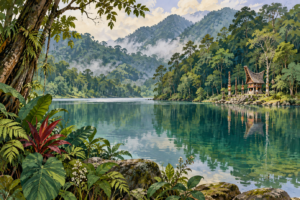
The calm water also matters to people beyond the forest. In my reporting for Mongabay, Amri Sitanggang, a staff member at the park’s conservation agency, said there are at least four lakes in the nature park. He described the lakes as sources for important rivers, including the Lae Pandaroh and Lae Simblin in Dairi and the Lae Mbilulu in neighboring Pakpak Bharat regency.
Think of a forest as a giant sponge. Trees, roots and layers of fallen leaves help the soil absorb rain. The water then moves more slowly toward springs and rivers. When forest cover is damaged, more water can rush across the ground and carry soil with it. Protecting the forest also helps protect water that people need.
A forest full of life and knowledge
The forest is home to orchids, pitcher plants, mosses and frankincense trees. My reporting also recorded wildlife such as hornbills and siamang gibbons. Local people know that some plants can be used as medicine or in rituals. This knowledge has grown from generations of living with the forest.
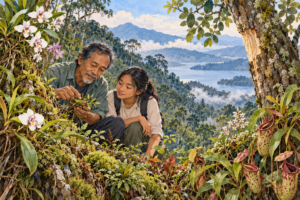
But knowledge does not always pass naturally from one generation to the next. A 2015 study by researcher Binsar Alexander Pardamean Sinambela, cited in the Mongabay report, found a 61.64 percent decline in knowledge of forest plants among people aged 20 to 35 in Lae Hole II village. The finding refers to the group and place studied; it does not describe every young person near the forest. Still, it raises an important question: who will know the names, uses and rules for protecting these plants in the future?
Threats do not always come from large-scale logging. Collecting orchids and other plants too often can also reduce their numbers. Plants that grow slowly or need special conditions may be hard to replace once they are gone. One visitor may think taking a single plant makes little difference. But when many people do the same, the loss can add up.
Protecting the forest means protecting relationships
For Hariara Institute, nature protection is stronger when it respects Indigenous communities and local knowledge. People who know the forest should help monitor and manage it. Community members could document plant names and uses together with elders and young people, with the community’s consent and safeguards against misuse.
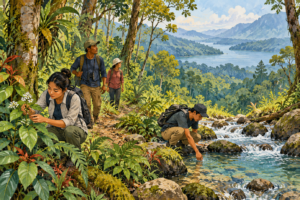
The government and park managers should also make sure visitors receive clear guidance, tourism does not damage habitats and wild plants are not taken from the forest. Protection takes more than putting up warning signs. It needs regular monitoring, support for local forest guardians and a real role for communities in decisions about how the forest is cared for.
Sicike-cike shows that a forest is more than a collection of trees. It is a place where water begins, a home for wildlife and a landscape held in community memory. When we protect the forest and respect the people who care for it, future generations can inherit its lakes, plants and stories.
#SicikeCike #SicikeCikeNaturePark #Dairi #NorthSumatra #Pakpak #HutanSicikeCike #ForestConservation #Biodiversity #IndigenousKnowledge #IndigenousRights #WatershedProtection #CommunityBasedConservation
Author Bio
Barita News Lumbanbatu is the executive director of Hariara Institute and an environmental journalist based in North Sumatra. A Rainforest Journalism Fund grantee, he reports for Mongabay Indonesia, Mongabay Global and The China Global South Project on forests, biodiversity and Indigenous rights.